fashion week is the flirtation of clothes with buyers and press
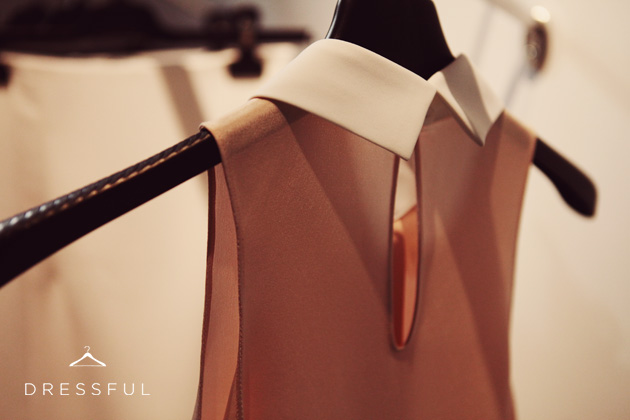
Fashion week is when it becomes crystal clear to you that it is impossible to write properly about collections based on photos. The flirtation takes place on the runway, not through the screen. However, often not even a front row seat will ensure you will be able to see and take in every detail on the garment (this is especially true for haute couture, which is built upon exquisite craftsmanship). I think the ideal way to experience a collection is this: first, you go to the show to see the clothes on models, in motion, to discover how the garments behave. After a day or two, you go to the showroom to take in the details and see how the garments are made (the runway is always about the bigger picture). Buyers work this way, as well as editors and (some) fashion journalists.
Last week I saw a Maison Martin Margiela dress, the defining aspect of which was the sound of velcro straps holding the skirt together being pulled apart. If I saw a photo of the dress, I wouldn't give it a second thought nor realize that due to adjustable velcro straps you can wear the dress in countless ways. It's not just individual garments: many times I've attended a show and the official photos released afterwards didn't look nearly as dashing as the runway. Though photos make clothes immortal, they often don't convey all their magic.
Continue reading...
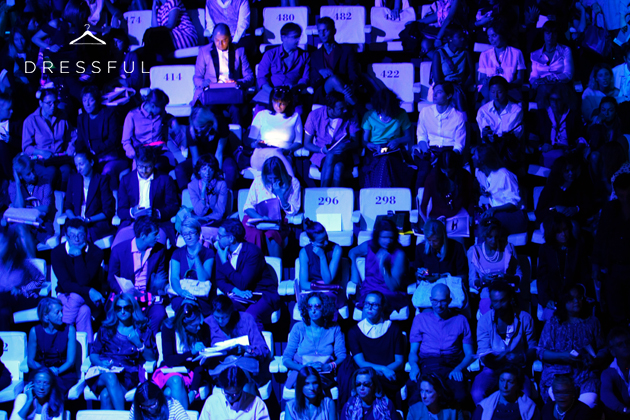
Audience at the Emporio Armani Spring/Summer 2012 show
You know the awkward moment when people who don't have anything to do with fashion shows feel entitled to dictate who has the right to sit front row and who doesn't? Usually the sole purpose of their relevant, well-informed remarks is to downgrade one of the groups of people who – much to their chagrin – frequently do find themselves sitting front row no matter what anyone thinks. Editors and bloggers still seem to be favorite targets, though I think it's high time for people to realize it's pointless to keep adding fuel to the "bloggers vs. editors" debate. You don't compare apples to oranges either, do you? (Much to my chagrin, people do not realize.)
The thing with individual opinions on who should (not) sit front row is that unless you actually have an impact on how the seating chart will be arranged, nobody cares.
A view I encounter ever so often is that bloggers should be banned from front rows by default because unlike editors, journalists and buyers, they don't do any "real" work. I think it's rather cheeky to act like you know better than the person responsible for the seating chart. Essentially, you assume fashion houses are incapable of picking appropriate guests. Fashion houses aren't stupid. Every person attending the show is there for reasons beneficial to the brand. When they seat Rumi and Bryanboy in front row, it's because they'll tweet and post photos from the show on their blogs, transmitting the brand's message and aesthetic to an audience of hundreds of thousands. The same goes for non-major bloggers like yours truly, except our audiences are smaller.
Bloggers do the same as editors, buyers and journalists: promote brands. This is why we don't exactly have to point guns at PR people's heads to be invited to shows. It's a reciprocal situation, and it's up to each fashion house who they decide to put in their front row. There's no "should" that applies to all of them. It only depends on how interested they are in global online coverage and promotion.
(I mentioned editors as "targets" in the first paragraph because I've heard ambitious bloggers say front rows should be bloggers-only, which is ... not how this industry can work.
The other side of the coin and all, though more harmless than the one I discussed.)
Continue reading...
March 28, 2012
3 Comments