Archive | Fashion industry RSS feed for this section

Haute couture: the most voluminous fashion fantasy

January 25, 2013

8 Comments

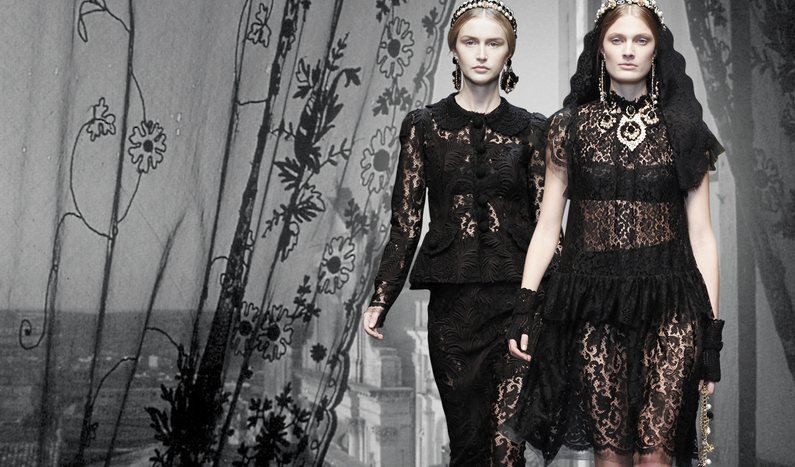
Armani Privé haute couture Spring 2013

Armani Privé haute couture Spring 2013

Looking at the new haute couture collections for Spring 2013, presented in Paris this week, I've toned down my analytical voice in favour of letting my imagination flow with the most voluminous fashion fantasy. Still captivated by the Valentino: Master of Couture exhibition, I now believe haute couture is more important than ever because many designers who created ready-to-wear out of dreams are gone. Haute couture, with its undisputed beauty sustained by technical intricacy, is the last one transcending the mundane.

Haute couture consists of secrets whispered from generation to generation ... If, in ready-to-wear, a garment is manufactured according to standard sizes, the haute couture garment adapts to any imperfection in order to eliminate it.

– Yves Saint Laurent

Continue reading...

How bright is the future of fashion magazines?

January 13, 2013

3 Comments

The question of online versus print is a constant hot issue with big newspapers closing their doors and moving on to digital editions. Is the future of fashion magazines looking any brighter?

Fantastic Man & The Gentlewoman
Fantastic Man and The Gentlewoman

Is fashion publishing moving towards niche publications?

In the fashion industry, the general consensus seems to be that fashion has been very slow to adapt to the internet. Advertisers (without whom magazines can't survive) are still investing a lot of money in the print media, so there will be a future for fashion magazines, especially the more specialised and niche publications, of which Fantastic Man (edited by Jop van Bennekom and Gert Jonkers) and The Gentlewoman (edited by Penny Martin) are the most obvious examples. Reminiscent of a book in both volume and content and setting a high editorial standard with their personality-based long-form journalism, Fantastic Man and The Gentlewoman are magazines you keep on the shelf after reading and return to them every once in a while like you would to, yes, a really great book.

Another reason why I believe the digital versions of fashion magazines won't completely take over is that fashion is above all visual. Many readers feel that beautiful photography and layout don't translate equally well on screens. I love technology and get some fashion magazines through apps, but my preferred way of absorbing fashion visuals remains magazines and books. Last but not least, the glossy paper and the addictive smell of a fresh magazine straight from the printing house are irreplaceable appetisers before the luxury you're about to find in the magazine's pages.

Spread from The Gentlewoman

Print and digital: a marriage of convenience?

I believe the smartest practice regarding print and online is to have them complement each other. The emergence of something new doesn't mean you have to ditch everything that existed before. Coincidentally or not, this ties into a fascinating recent development: several projects that started online are now going into print. ASOS and Style.com publish their own magazines, and Net-A-Porter has announced they'll launch theirs this year.

Newspapers fail because we get news online, often as they're happening, so by the time they appear in print the next day, they're old news. The future of fashion magazines, known more for in-depth features and editorials, is well-researched, atemporal, high quality content you won't find anywhere else. Bright enough for you?

Continue reading...

Wanted: Non-Designers, Dead Designers

May 10, 2012

5 Comments

With last week's news of Anna Dello Russo designing an accessories collection for H&M and revival of the brand Elsa Schiaparelli, I've been asking myself what is rotten in the fashion industry that the most exciting designers seem to be non-designers and dead designers.

Anna Dello Russo for H&M

I.
When the press release announcing the collaboration between Anna Dello Russo and H&M landed in my inbox, my initial thought was that these collaborations are getting old. While I had anticipated a number of them in the past with curiosity and enthusiasm, they no longer feel as exclusive and special because there is no space to breathe between one collaboration and the next. Once the hype in the media and online has subsided, you just know there's going to be a new collaboration tugging at your subconscious consumerist strings very soon. This cyclic course should really be linear because the way to progress is innovation, not repetition.

Though this is of little concern to H&M as their marketing strategy is collaborating with big fashion names – not even necessarily designers – to bring in tons of money, I would be infinitely more excited about high street brands employing young, emerging designers. It would reintroduce suspense and freshness, two elements almost all previous H&M collaborations have lacked (if you're familiar with the designer's signature style, you have a good grip of what the collaboration will be like) and contribute towards a less self-obsessed fashion industry.

Elsa Schiaparelli hats

II.
While H&M's decision to collaborate with Anna Dello Russo makes perfect sense in terms of appeasing the evergrowing online crowd of fashion bloggers, readers and commentators, the news about the revival of Schiaparelli took me by surprise. Diego Della Valle, CEO of Tod's, plans to open Maison Schiaparelli in Paris during menswear fashion week in June. His statement that "we won't be chasing the commercialism of the fashion world: this is a project that aims for the best in terms of taste and quality, and will provide all the calm necessary to achieve that" (source) indicates a possible radical shift in the brand's vision and aesthetic, much like revived Balmain. Elsa Schiaparelli was anything but toned down with her claw gloves, trompe l'oeil designs, walloping headpieces and lobster dresses. If she were alive today, her number one customer would be Anna Dello Russo!

The aim of the old-new brand is to revisit Elsa Schiaparelli's ideas in a contemporary style. Has fashion really become so dull that nobody has their own ideas? I don't think so. Besides, Schiaparelli's ideas were revolutionary in that moment in time. They would not have the same effect today, no matter how skillfully appropriated and turned inside out. It was easier to stand out in the 1930s than during reign of singers wearing raw meat to get attention.

III.
Refusing to employ new talent and ideas in the fashion industry is an enormous and deliberate waste of creative potential. As a creative person, you can achieve a lot by self-initiative, but you improve the most when you have to meet increasing demands that do not depend entirely on yourself.

The fashion industry is increasing its demands everywhere but in creativity.

Continue reading...

Should bloggers sit front row at fashion shows?

January 10, 2012

7 Comments

Emporio Armani Spring Summer 2012 audienceAudience at the Emporio Armani Spring/Summer 2012 show

You know the awkward moment when people who don't have anything to do with fashion shows feel entitled to dictate who has the right to sit front row and who doesn't? Usually the sole purpose of their relevant, well-informed remarks is to downgrade one of the groups of people who – much to their chagrin – frequently do find themselves sitting front row no matter what anyone thinks. Editors and bloggers still seem to be favorite targets, though I think it's high time for people to realize it's pointless to keep adding fuel to the "bloggers vs. editors" debate. You don't compare apples to oranges either, do you? (Much to my chagrin, people do not realize.)

The thing with individual opinions on who should (not) sit front row is that unless you actually have an impact on how the seating chart will be arranged, nobody cares.

A view I encounter ever so often is that bloggers should be banned from front rows by default because unlike editors, journalists and buyers, they don't do any "real" work. I think it's rather cheeky to act like you know better than the person responsible for the seating chart. Essentially, you assume fashion houses are incapable of picking appropriate guests. Fashion houses aren't stupid. Every person attending the show is there for reasons beneficial to the brand. When they seat Rumi and Bryanboy in front row, it's because they'll tweet and post photos from the show on their blogs, transmitting the brand's message and aesthetic to an audience of hundreds of thousands. The same goes for non-major bloggers like yours truly, except our audiences are smaller.

Bloggers do the same as editors, buyers and journalists: promote brands. This is why we don't exactly have to point guns at PR people's heads to be invited to shows. It's a reciprocal situation, and it's up to each fashion house who they decide to put in their front row. There's no "should" that applies to all of them. It only depends on how interested they are in global online coverage and promotion.

(I mentioned editors as "targets" in the first paragraph because I've heard ambitious bloggers say front rows should be bloggers-only, which is ... not how this industry can work.
The other side of the coin and all, though more harmless than the one I discussed.)

Continue reading...

Thought of the day: Fashion industry

May 9, 2011

3 Comments

Moschino Long live catwalks, photographers, castings and the press

I miss the times when fashion
was about clothes,
not who got fired.


Continue reading...