Tag Archives: haute couture

Experiencing clothes

March 28, 2012

2 Comments

vogue-talents-corner-06

fashion week is the flirtation of clothes with buyers and press


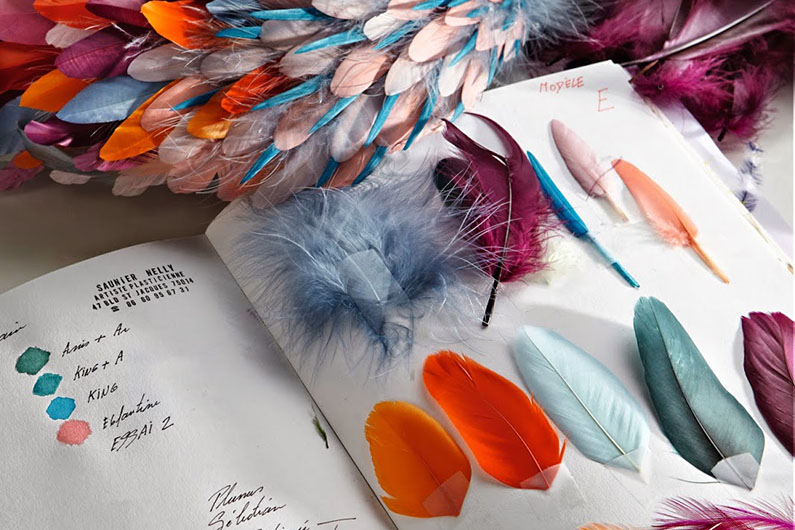
Fashion week is when it becomes crystal clear to you that it is impossible to write properly about collections based on photos. The flirtation takes place on the runway, not through the screen. However, often not even a front row seat will ensure you will be able to see and take in every detail on the garment (this is especially true for haute couture, which is built upon exquisite craftsmanship). I think the ideal way to experience a collection is this: first, you go to the show to see the clothes on models, in motion, to discover how the garments behave. After a day or two, you go to the showroom to take in the details and see how the garments are made (the runway is always about the bigger picture). Buyers work this way, as well as editors and (some) fashion journalists.

Last week I saw a Maison Martin Margiela dress, the defining aspect of which was the sound of velcro straps holding the skirt together being pulled apart. If I saw a photo of the dress, I wouldn't give it a second thought nor realize that due to adjustable velcro straps you can wear the dress in countless ways. It's not just individual garments: many times I've attended a show and the official photos released afterwards didn't look nearly as dashing as the runway. Though photos make clothes immortal, they often don't convey all their magic.

Continue reading...

Elegance in Exile exhibition: Russian expat fashion

October 31, 2011

9 Comments

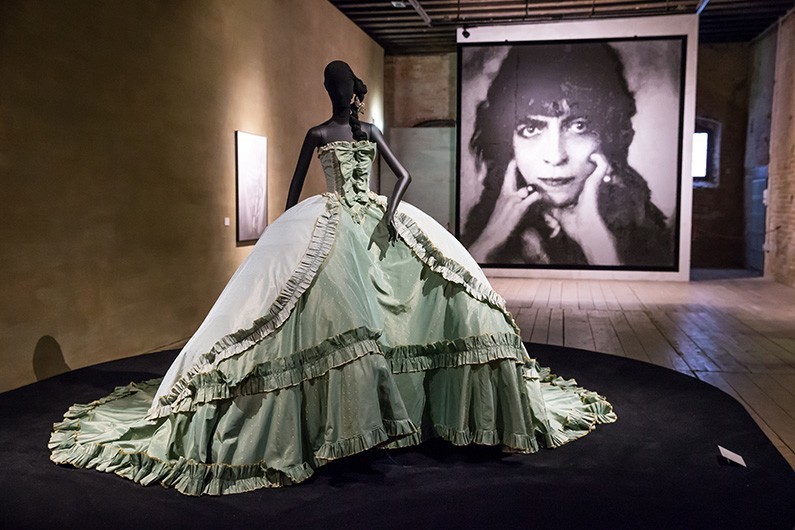
Last weekend I took a quick trip to Venice with my family to see the Elegance in Exile: Between fashion and costume, the time of Sergei Diaghilev (L'eleganza in esilio. Tra moda e costume, il tempo di Diaghilev) exhibition at Palazzo Mocenigo.

The exhibition portrays the influence of Russian émigrés on fashion, displaying costumes of Ballets Russes (The Russian Ballets) designed by Leon Bakst, Natalia Gončarova and Alexander Benois, as well as dresses worn by aristocrat Russian women who fled to Europe after the October Revolution in 1917. Most of the dresses are part of fashion historian Alexandre Vassiliev's personal collection, dating back to the 1920s and 1930s.

Elegance in exile exhibition

Elegance in exile exhibition

Elegance in exile exhibition

+++

We visit Venice approximately 4 times a year out of a fascination with its narrow street and magic atmosphere that only grows stronger with time. Thanks to my dad's internal GPS system we know our way around quite well, but we had never walked around the part of the city where the Palazzo Mocenigo is located before. Whenever you think you're almost there in Venice, you find out your destination is actually not where you thought it was, even if you followed the map closely. You have to go back a bit, cross another bridge, turn left and maybe you'll find it there … but not always.

Venice is alluring and deceiving. In her case, the second is a quality.

+++

Elegance in exile exhibitionCocktail dress
USA, circa 1926
Floral chiffon and velvet

+++

Elegance in exile exhibitionSecond to left: Evening dress
Worth Haute Couture house
Paris, 1922
Ivory satin with Russian folk style silver and gem embroidery

Evening cloak from Great Britain

+++

Elegance in exile exhibitionCocktail dress by Soeurs Carrott (that was written on the plate – could it be the Callot sisters?)
Paris, 1923
Red chiffon with Chinese style silk thread and bead embroidery

Cloak in art deco style
USA, 1925
Black brocade silk with floral pattern, metallic thread and fringes

Elegance in exile exhibitionEvening tunic by Anely
Istanbul, 1923
Black silk, embroidery with silver thread and red beads

Elegance in exile exhibitionEvening dress
London, 1919
Red lamé with bead trimming

+++

Elegance in exile exhibition

Left: Ballets Russes dark purple wool crêpe costume by Leon Bakst in 1923. Created for Ida Rubinstein in Phaedra by D'Annunzio and Racine.
Right: Ballets Russes costume in embroidered and hand-painted yellow ochre and fuchsia silk by Alexander Benois, created for the ballet The Nightingale (Le Rossignol). 1914.

The Russian Ballets, probably the greatest ballet company of the 20th century, took Paris (who had never seen anything like it before) by storm in 1908. They staged operas and ballets choreographed by Mikhail Fokine in the first season, but focused mainly on ballets later on.

Impresario Sergei Diaghilev was the driving force behind the Ballets. Because of his passion for art and ambition to work with the most talented costume designers, composers and dancers of his time, the Ballets became an international influence on fashion and culture. They introduced the oriental style, which went on to become a huge trend in Paris, and opulent, colorful costumes with Russian folkloric elements and fur embellishments, a far cry from Western fashion.

The famous Paris premiere of Stravinsky's Rite of Spring caused a riot in the audience partly because of the animalistic costumes by Nicholas Roerich. This scene was brilliantly recreated at the beginning of Jan Kounen's 2009 film Coco Chanel & Igor Stravinsky. In the same film Coco Chanel gives a custom-made rubashka blouse to Stravinsky's daughter. Chanel really did experiment with rubashkas and liked to use fur in dressmaking as many of her clients were Russian.

+++

Elegance in exile exhibitionEvening dress (back)
Belgrade, 1920
Magenta silk, bead embroidery

+++

Elegance in exile exhibition

Elegance in exile exhibition

Elegance in exile exhibition

+++

Elegance in exile exhibition

Elegance in exile exhibition

+++

Elegance in exile exhibitionDress by Lanvin
Paris, 1923
Silk with lamé brocade and lace trimming

+++

A note accompanying the exhibition tells me the Russian women who had fled the country lived in poverty and often had to find work as seamstresses or create embroideries in order to make a living. The exhibition, situated in a lavish Venetian palace, evokes images of impossibly glamorous world of aristo-expats lamenting their homeland in faraway cities, fancy dresses and evenings in opera houses being the only remnants of their glorious past. It is as if the exhibited dresses are competing in quality and quantity of beading and embroidery. They don't make such dresses any more, do they? The closest to them today would be haute couture, another world that will always stay alien to those not privileged enough to be a part of it, no matter how many documentaries on the subject they shoot and how many articles they write in attempt to uncover the mystery.

I particularly enjoyed seeing a dress by Charles Frederick Worth (considered to be the first couturier), though they had obstructed it with a giant unidentified cloak from Great Britain, and a lovely cobalt blue Lanvin number from 1923 – i.e. Lanvin by Jeanne Lanvin. The heaviness of the Russian Ballets costumes surprised me; they were probably difficult to dance in, especially as the dancers also wore large headgear (kolpak, ushanka).

Elegance in Exile makes a fashion history lover's heart flutter, offering a glimpse into the time when glamour was slower and more meticulous than we can afford today – figuratively and literally.


The exhibition is open until January 6 February 29, 2012.
Palazzo Mocenigo, Santa Croce 1992, Venice, Italy.

Continue reading...

Givenchy Fall 2011 Haute Couture

July 19, 2011

7 Comments

I want to write about fall collections, but thinking about warm clothes in proverbially neutral colorways borders on impossible when you spend your afternoons at the beach so you don't have to deal with the fact that air condition in your room is broken. I'm at the seaside and life couldn't be easier (forgetting A/C's bad manners for a sec), but the new collections are tempting me so much I wish I could put my vacation on hold for a few days and whisk off to Milan to see the clothes in life, up close and personal. The sea can wait.

Givenchy Fall 2011 Haute Couture

Givenchy Fall 2011 Haute Couture

Givenchy Fall 2011 Haute Couture by Riccardo Tisci is the compromise between my pastoral maritime state of mind and most earnest wish to dive into the next season head-first. White reminds me of summer (though it's just as beautiful in winter, I'm fascinated with the idea of wearing white so you blend in with snow ...), and so does the lightweight spirit these dresses exude through images. My initial reaction to the above photo, though seen only on a small laptop screen, was "angelic". When I saw the details, the exquisite craftmanship, I realized this collection is the kind of perfect beauty most of fashion aspires to, though it will not always admit it. Dresses for entities that transcend your regular European princesses and Hollywood actresses.

YouTube Preview Image
Givenchy Fall 2011 Haute Couture

In context of Tisci's past haute couture collections for Givenchy, this one is earning him remarks that we've been seeing the same gorgeous embellished dresses for at least 2 seasons. Tisci ditching runway couture shows in favor of smaller presentations tells me he prefers a more intimate approach to couture, releasing only a few images for the public and focusing on the women who will actually buy his designs. Therefore, it makes sense the dresses are tailored to their respective wearers, literally and metaphorically. Tisci understands his clients' taste, he knows what women feel beautiful in, and if that's not success in itself, I don't know what is. His couture is not his flight of fancy. Rather, its mission is to provide a glimpse of eternity to women from the secret world where haute couture is lived, not admired from afar.

Continue reading...

What is the true definition of haute couture?

September 17, 2010

9 Comments

John Galliano & Dior haute couture dress, photo ericabunker.comJohn Galliano & Dior haute couture dress

Haute couture is one of the most misused terms in fashion. Some of the uninitiated toss it around relentlessly in an ungainly belief that peppering your language with "exotic" French expressions will make you sound smarter while others (ab)use it because haute couture collections are way fancier than ready-to-wear, so everything that's at least a bit fancy in the eye of the beholder automatically becomes "couture":

My boyfriend bought me a Hysteric Glamour shirt
They're hard to find in the States, got me feeling couture

Gwen Stefani, Harajuku Girls

The main misconception people have about the term haute couture is that it applies to all handmade and/or made-to-order garments, whether manufactured by seamstresses at Dior or aspiring fashion design students. This isn't entirely incorrect, but it is a very loose interpretation of the term. Some fashion houses add to the confusion by falsely describing their special collections as "haute couture"; you'd think they should be the first ones making sure the term is used properly, but fashion industry probably fuels the mystery behind these two words on purpose as to create more buzz.

So, then, what is haute couture in its narrowest sense?

According to Wikipedia, the term haute couture is protected by law in France and is defined by the Paris Chamber of Commerce (Chambre de commerce et d'industrie de Paris). To earn the right to call itself a couture house and to use the term haute couture in its advertising and any other way, a fashion house must follow these rules:


  1. Design made-to-order for private clients, with one or more fittings.
  2. Have a workshop (atelier) in Paris that employs at least fifteen people full-time.
  3. Each season (i.e. twice a year) present a collection to the Paris press, comprising at least thirty-five runs/exits with outfits for both daytime wear and evening wear.

Fashion houses meeting these rather challenging criteria (the second is particularly fantastic, I have an unflagging desire to visit an haute couture atelier and observe the dressmakers' meticulous work because I often feel like it is more interesting than the preceding design process) are selected each year by the Paris Chamber of Commerce and then become members of the Syndical Chamber for Haute Couture (Chambre syndicale de la haute couture). However, even this most elite selection has its hierarchy - members are divided into "official" (French houses such as Chanel and Dior), "correspondent" (foreigners, most notably Armani and Valentino), "guest" (new talents), "jewelry" and "accessories".

The official ongoing list of fashion houses who make the cut is published here.

P.S. Don't forget to enter Dressful's first giveaway on Monday!

Continue reading...